A Vision for a Welcoming and Sustainable Community
Ideas for how our shared spaces could look and work a few years from now: more comfortable for neighbors, kinder to Florida’s water and wildlife, and less costly to care for.
info
A wishlist, not a budget. These concepts are wishlist items from the HOA Board. They aren’t budgeted projects, and nothing here has been approved, priced or scheduled. If the community decides to pursue an idea, the Board would get bids and present the cost and funding options at an open meeting, with proper notice, before any decision. Your ideas are welcome too.
Wishlist item 1
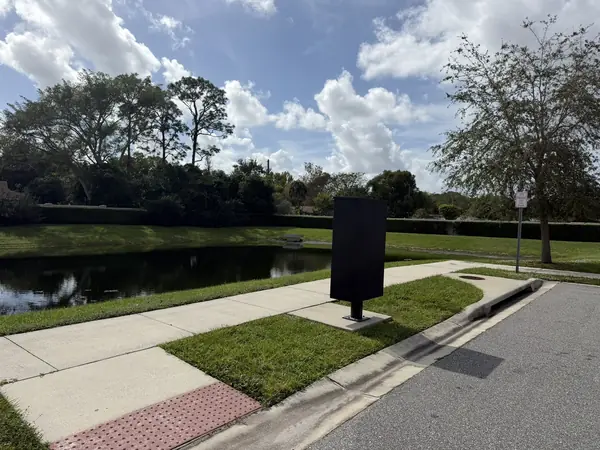
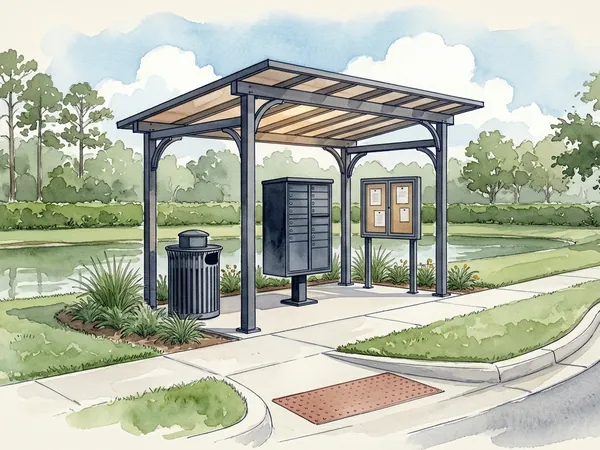
A sheltered mail kiosk
A covered spot to collect the mail out of the rain and sun, with a place for community notices and somewhere to toss junk mail.
photo_cameraTodaylightbulbConcept
What’s in the concept
Structure
Lean-to pergola · a freestanding, four-post shelter in powder-coated aluminum (charcoal), with curved corner brackets
Single-slope roof · translucent, bronze-tinted polycarbonate UV panels that let in soft light, sloping southward to filter harsh afternoon sunlight
Larger concrete pad · joined to the existing sidewalk, so the whole kiosk is a step-free walk from the curb ramp
Furnishings
The existing cluster mailbox · moved to opposite side of sidewalk for greater accessibility and welcoming curb appeal
Commercial-grade trash receptacle · powder-coated steel slats with a domed rain lid, in matching charcoal
Lockable bulletin board case · a glass-front, weather-sealed cabinet on posts for meeting notices and community news
Plantings
Fakahatchee grass and coontie · tough, low-water Florida natives around the new pad
Coreopsis · Florida’s state wildflower, for a little yellow at the edges
campaign Florida law requires Board meeting notices to be posted in a conspicuous place at least 48 hours ahead. A locked case at the mailboxes would give those notices a permanent, weatherproof home that every household passes.
Wishlist item 2
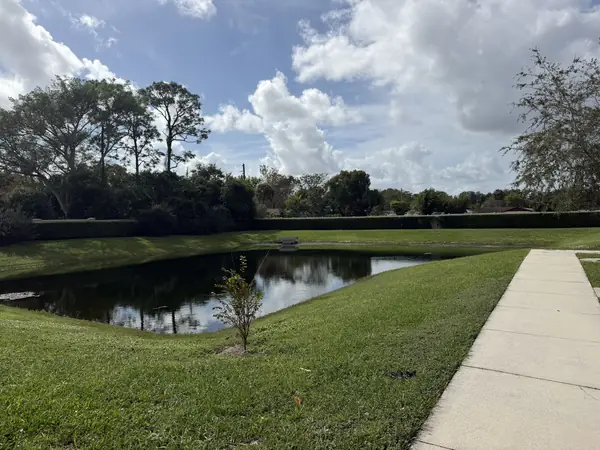
A native Florida landscape around the pond
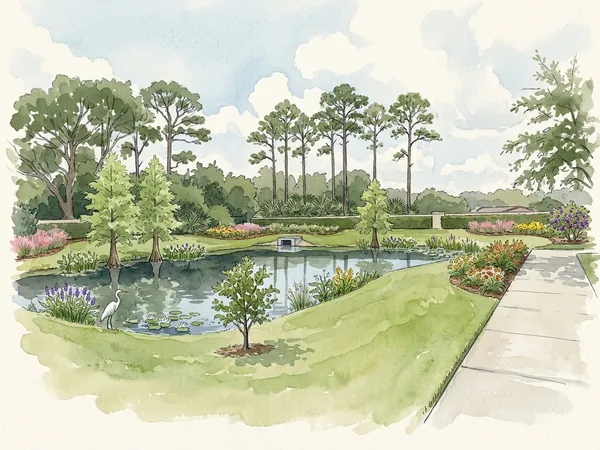
Turning the mowed slopes around our retention pond into a small native preserve that filters the water, shelters birds and pollinators, and needs less mowing over time. The wall, the hedge and the drainage structure stay exactly as they are; the plantings fill in the open lawn.
photo_cameraTodaylightbulbConcept
What’s in the concept
On the far bank
Longleaf and slash pines · a loose grove on the high ground in front of the hedge
Dwarf palmetto (Sabal minor) and saw palmetto · a low understory beneath the pines
At the water’s edge
Pond cypress · feathery native trees that thrive with wet feet
Pickerelweed, arrowhead (duck potato), golden canna and soft rush · planted on the shallow shelf around the edge
Fragrant water lily · a few native lilies, leaving most of the water open
Around the perimeter
Pink muhly grass and Fakahatchee grass · soft native grasses that hold the slope
Coreopsis, blanket flower and firebush · year-round color for butterflies and hummingbirds
American beautyberry · purple berries for birds in the fall
Pine straw mulch, with mowed turf kept · along the sidewalk and around the drainage structure for maintenance access
eco
Why native plants at the water’s edge? Once established, plants on the shallow shelf absorb nutrients from runoff and shade the water, which helps prevent algae blooms and leaves less room for invasive weeds. Native plants also need far less water, fertilizer and mowing than turf on a slope. The pond is part of our permitted stormwater system, so any planting would be checked against the St. Johns River Water Management District permit and planned with an aquatic-plant professional.
Wishlist item 3
A sustainable and Florida-friendly lawn along Howell Branch Road
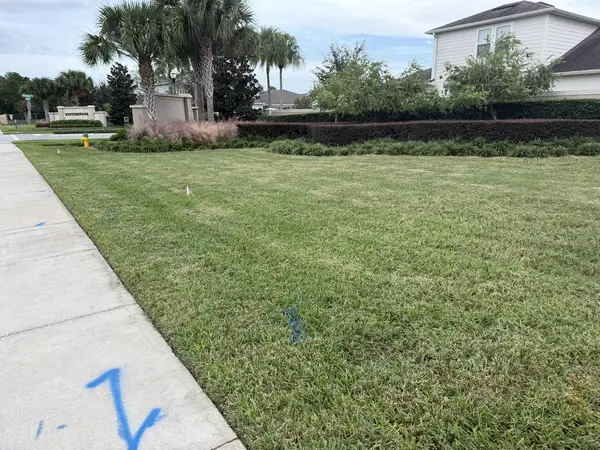
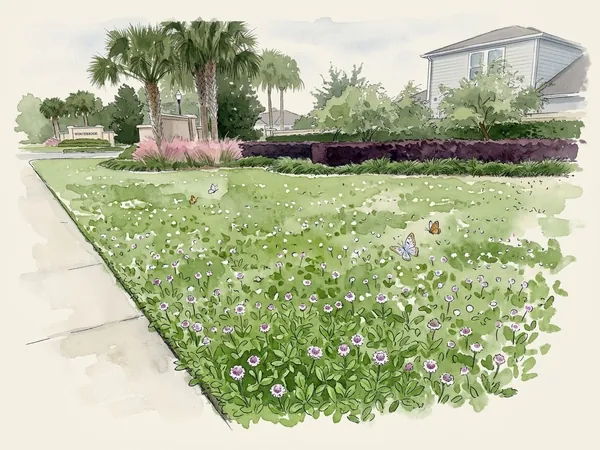
Replacing the St. Augustine turf in the open common area along Howell Branch Road with turkey tangle frogfruit, a low, flowering Florida native groundcover that needs a fraction of the water, mowing and treatment of a traditional lawn.
photo_cameraTodaylightbulbConcept
What’s in the concept
Groundcover
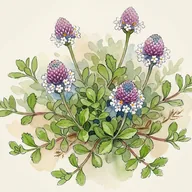
Turkey tangle frogfruit (Phyla nodiflora) · a low, spreading Florida native, a few inches tall, with tiny white-and-purple flowers much of the year
Crisp edges · neat borders along the sidewalk and planting beds so it reads as intentional
Kept as is
Sabal palms, pink muhly grass and liriope
The burgundy and green hedges
Wildlife
Butterfly host plant · frogfruit feeds the caterpillars of the phaon crescent, buckeye and white peacock butterflies
payments
Lower upkeep costs. Once established, frogfruit tolerates both drought and flooding, needs little or no irrigation, and can be mowed just a few times a year or left alone. It doesn’t need regular fertilizer or the pest treatments St. Augustine often does. That means a smaller water bill and fewer mowing visits. The trade-offs: it isn’t made for heavy foot traffic, its flowers attract bees, and it can go partly dormant in a cold winter. All of that suits an area that’s mostly looked at rather than walked on.
How frogfruit compares with other lawn alternatives
Winter Park is in USDA zone 9b (average coldest night 25–30°F), on the line with 9a (20–25°F). Every option here survives our winters, but most look different after a frost, and Central Florida’s long, hot summers are the real test.
Lawn alternatives compared for drought and frost tolerance in zones 9a and 9b
Plant
Drought (9a/9b)
Frost & winter
Advantages
Disadvantages
FrogfruitPhyla nodifloraecoFlorida nativeIn the concept
Excellent. Tolerates both drought and flooding once established.
Hardy here. May brown or go partly dormant after a frost and greens up in spring.
Florida native and butterfly host plant
Little or no irrigation, mowing a few times a year or none
Excellent once established. Resists drought, nematodes and disease, and needs little fertilizer.
Drops its leaves after a frost, leaving brown runners until it regrows in spring.
Most lawn-like look; can be mowed
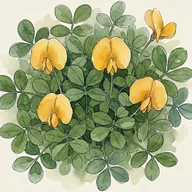
Golden flowers all summer
Fixes its own nitrogen
Not native (South America)
Slower and costlier to establish (sod or plugs, with regular watering and weeding at first)
Light to moderate foot traffic
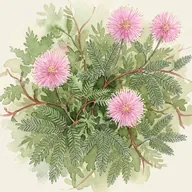
The takeaway: the two Florida natives, frogfruit and sunshine mimosa, handle our heat and dry spells best and cost the least to keep up. Mixing them is a common approach: frogfruit stays fuller in winter while sunshine mimosa adds summer color. Perennial peanut gives the most lawn-like look, but it’s non-native and costs more to establish.
helpWhat about clover? · Why microclover and white Dutch clover aren’t recommended hereexpand_more
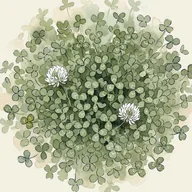
Clover lawns are popular in cooler parts of the country, but they’re a poor fit for Central Florida. Both microclover and white Dutch clover are cool-season plants from Europe and Asia. Here they grow best from late fall through spring, then thin out or die back in our long, hot, humid summers, often leaving bare patches by midsummer. Keeping them green would take regular irrigation and reseeding every fall, which works against the goal of less water and less upkeep. They aren’t native, so they don’t host Florida butterflies the way frogfruit and sunshine mimosa do, and white clover’s flowers draw heavy bee traffic underfoot. They work best as a winter companion overseeded into turf, not as a year-round lawn replacement.
Clover options compared for drought and frost tolerance in zones 9a and 9b
Plant
Drought (9a/9b)
Frost & winter
Advantages
Disadvantages
MicrocloverTrifolium repens ‘Pirouette’ or ‘AberAce’Non-native
Poor in our summers. Needs steady moisture and tends to thin out in heat and drought.
Very frost hardy. Stays green through winter, when it grows best.
Small, soft leaves with fewer flowers than white clover
Fixes nitrogen, so little or no fertilizer
Mixes well with turf for winter green
Not native (Europe and Asia)
Likely needs irrigation and reseeding in Central Florida
Bred for cooler climates
White Dutch cloverTrifolium repensNon-native
Poor. Acts like a winter annual here and withers in summer heat unless the soil stays moist.
Very frost hardy. Best from late fall through spring.
Inexpensive seed, quick to sprout
Fixes nitrogen
Valuable nectar for bees in cool months
Not native (Europe and Asia)
Patchy or gone by midsummer
Heavy bee activity underfoot
Wishlist item 4
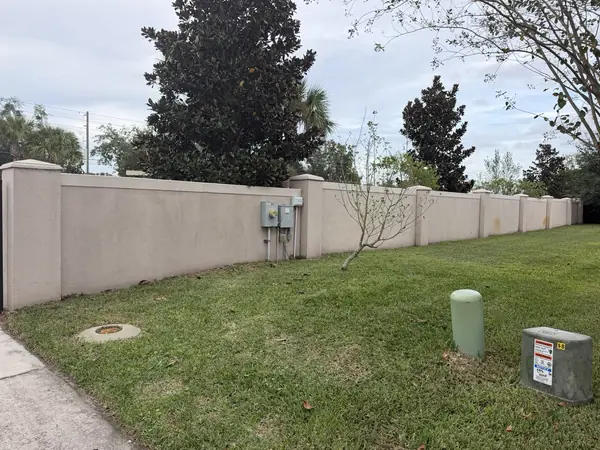
A native buffer along the perimeter wall
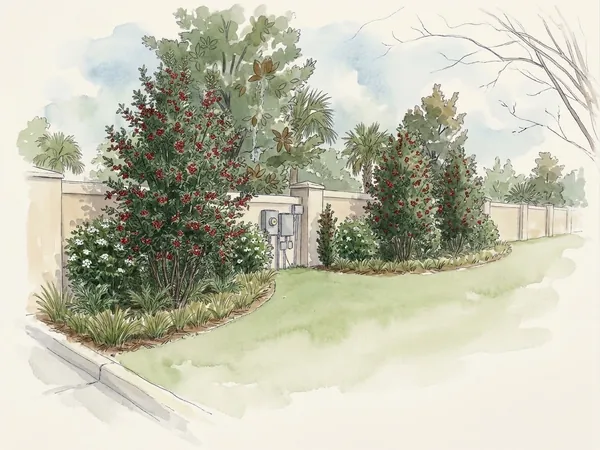
A layered planting of native evergreen shrubs along the inside of the wall to soften its long, blank face, screen the view, and take some of the edge off the road noise, while keeping utility equipment reachable.
photo_cameraTodaylightbulbConcept
What’s in the concept
Screen (back row)
Walter’s viburnum · a dense native evergreen for hedges and tall screens, in sun or shade, with white spring flowers
Yaupon holly · fine evergreen leaves and red winter berries for birds
East Palatka holly · a narrow, upright holly that fits between existing trees
Front layer
Fakahatchee grass and coontie · tough, low natives on pine straw mulch
Kept clear
Meters and utility boxes · open access around electric, cable and water equipment, as the utilities require
payments
Lower upkeep costs. Once established, these natives need little or no irrigation, no regular fertilizer, and only occasional pruning, and every square foot of bed is a square foot less turf to mow and edge along the wall. A note on noise: plants mostly soften how noise feels; the masonry wall does most of the real sound blocking.
Wishlist item 5
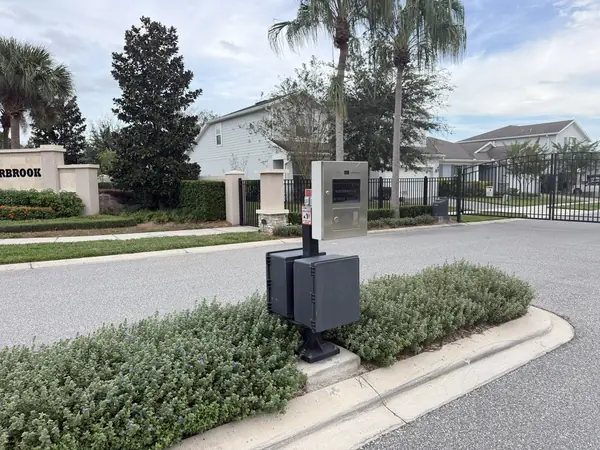
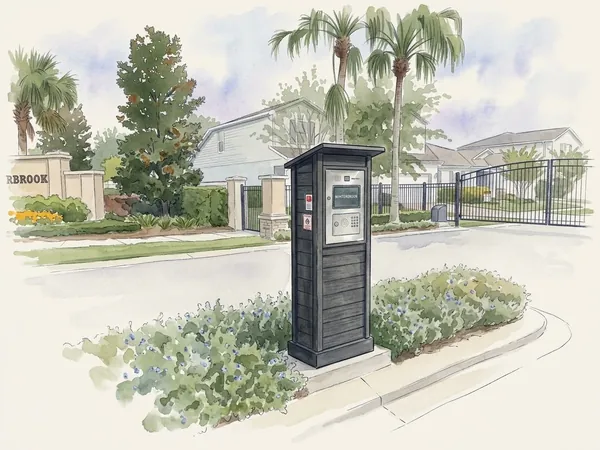
A finished surround for the gate call box
Wrapping the call box post and its equipment boxes in a single, tidy pedestal, so the first thing guests see at the gate looks as cared for as the rest of the entrance.
photo_cameraTodaylightbulbConcept
What’s in the concept
Pedestal
Recycled HDPE poly lumber · marine-grade plastic boards in charcoal to match the gates and the mail kiosk
Horizontal boards with square corner trim · and a simple base plinth
Hinged service door · hides the equipment boxes but keeps them reachable for the gate technician
Roof cap
Single-slope roof · sloping away from the street, with a slight overhang that shades the call box screen
Kept as is
The existing call box · screen, speaker and keypad at driver’s-window height
The emergency-access sign · mounted on the side, still visible
payments
Lower upkeep costs. HDPE poly lumber doesn’t rot, crack or fade the way wood or painted surfaces do, and it never needs painting or sealing. It’s also lighter and simpler to build than a masonry pillar. The gate company would confirm ventilation, service access and the camera’s view before anything is built.
From idea to project
How a wishlist idea becomes a project
1
Ideas are collected. From the Board and from homeowners, all in one place.
2
The Board researches. Feasibility, permits, upkeep, and quotes or competitive bids from qualified contractors.
3
Owners weigh in. Costs and funding options, such as the annual budget, reserves or a special assessment, are presented at an open meeting with proper notice.
Benches by the pond, better lighting, a spot for a little free library, more shade trees? Send us your idea for Winterbrook 2030. Every idea goes to the Board, and you’ll get a reference number so you can follow the conversation. Photos and sketches are welcome.